As we prepare to start the dismantling works in Stove House 5 here are some views of the surrounding area from the vantage point of our scaffolding at the top of Stove House 5.

Looking north at
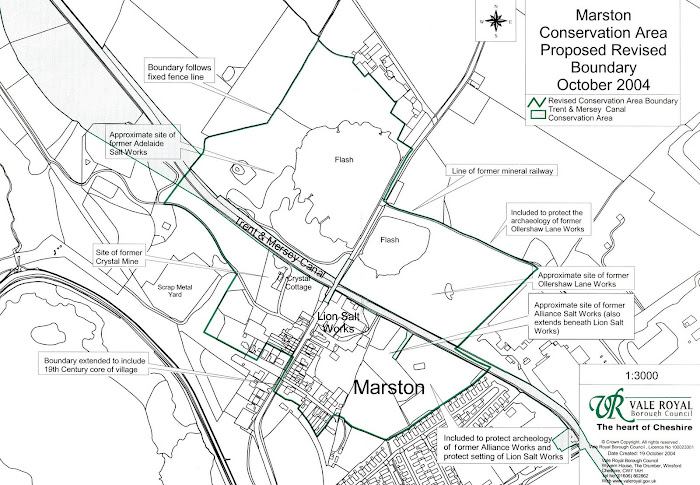
Marston Flashes, created in 1928 by the collapse of the Adelaide Rock salt Mine. Lion Salt Works pumped brine into the Brine Tank from brine streams 150 feet below ground. The Adelaide Works mined rock salt from a Bottom bed of rock salt at 300ft.
The Trent and Mersey Canal passes along the front of the Lion Salt Works and was used to bring coal to
the works, mainly from collieries in the Stoke-on-Trent area of North
Staffordshire
In 1888 the Manchester Guardian described this area as a 'black country' with baked earth and sulphurous black smoke polluting the atmosphere where no trees or grass could grow.

Looking south the distant tower of St
Helens Church,
Witton can be seen. Between
Marston and
Witton there were rock salt mines which
collapsed causing the road to be diverted. The collapsed mines were used as land fill sites for lime waste from the local chemical works.
Ashtons and
Neumans Flashes are now landscaped as a Community Woodland with footpaths and cycle ways. This is a great area for bird watching with many wading species and exotics such as black swans, egrets, grebes and last year black legged stilts.

To the south west you can see the chemical works of
Brunner Mond which uses brine and salt to make soda ash and sodium bicarbonate. The works is at
Winnington, but looks out over the
Anderton Lift, which connects the Trent and
Mersey Canal to the River weaver. the Lion Salt Works shipped salt by
narrow boat along the canal to
transfer salt to waiting barges where it was sailed to Liverpool Docks for export overseas.
web links to follow
 Preparations were made today for the new gates at the entrance to the salt works. A new wooden fence was installed between our entrance and our neighbours and the vegetation was cut back to help with the installation of the gates, which will be erected next Monday. The fence butts up to the Smithy building, where the salt pans, salt tools and salt boxes were made and repaired. The new fence will be shown next week.




 Posts
Posts